
BORGWARDT · DEBATE DOJO · A DEMO
Welcome to the Dojo, young warrior

Learn to
& the art of
Argue.

This is a demo of my Debate Dojo. I use it in my classroom.

Told byMs. Borgwardt
FormatFive belts, one tournament
StatusLive in my classroom
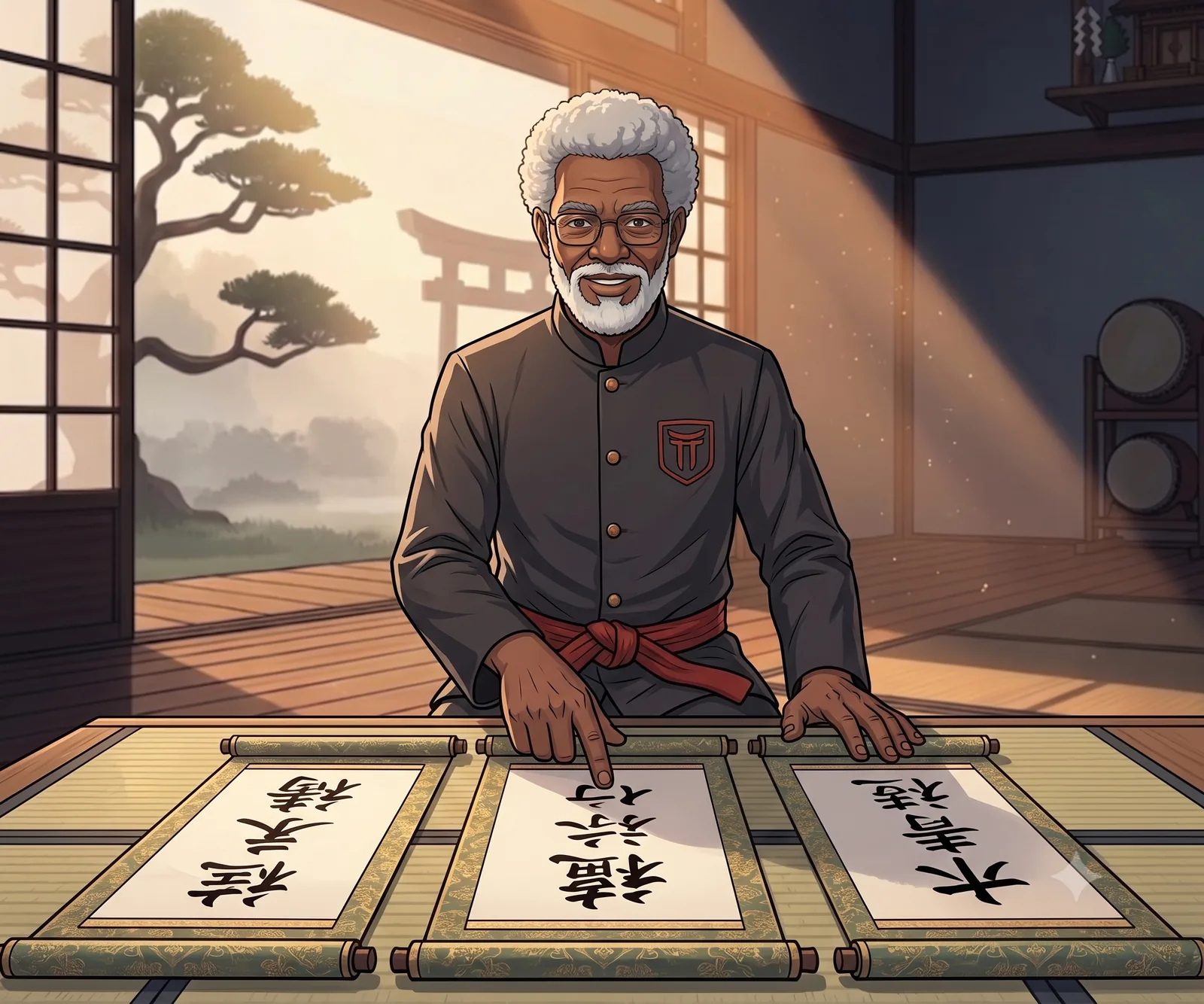
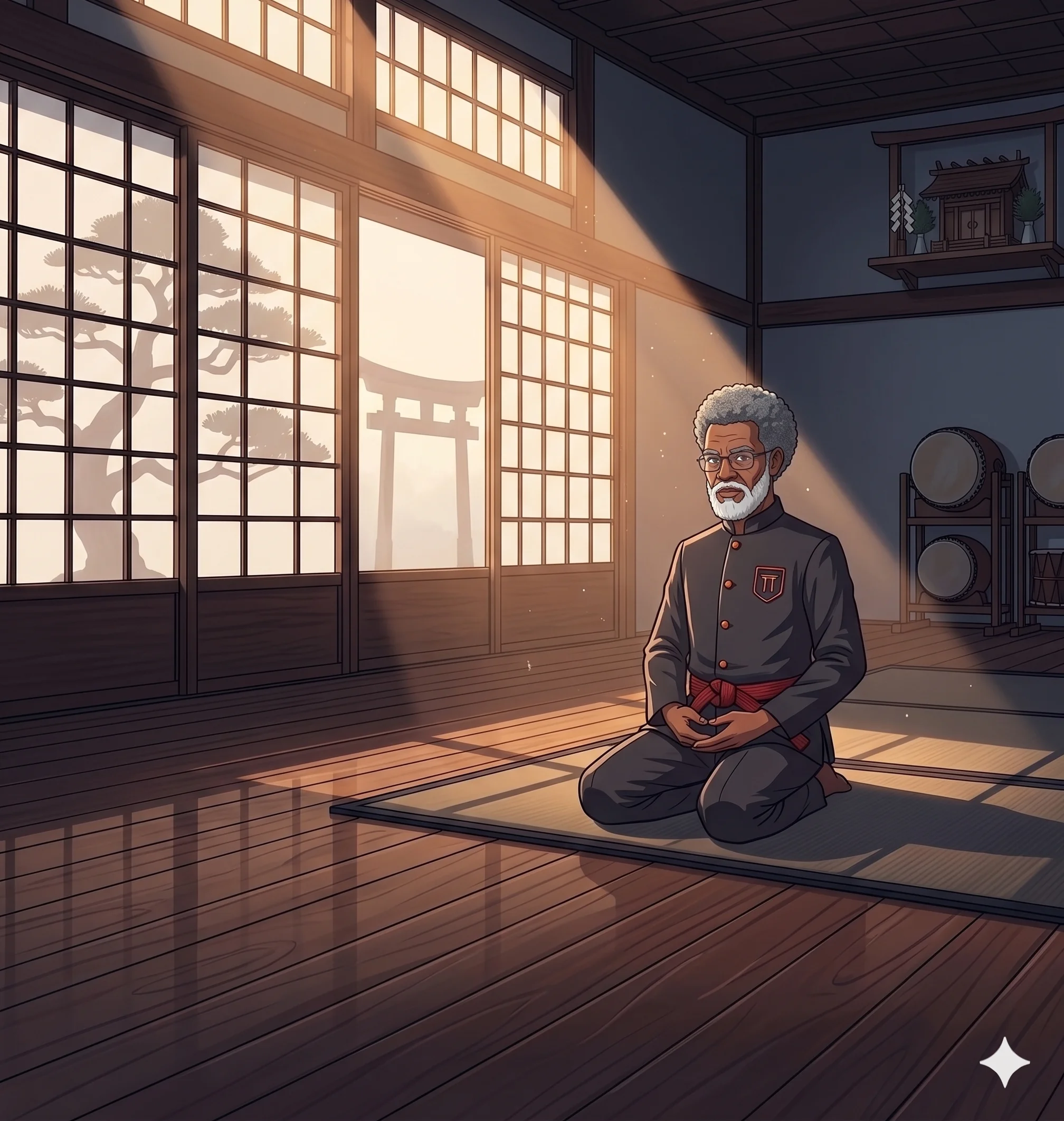
Come in. The sensei is already waiting for you.
The sensei, waiting for you in the Dojo
▶ Enter the Dojo

Why I built this

I'm Svenja and I teach English and Economics at a vocational school, and I built this for my students. I want to teach them how to debate in English, and I wanted every single student to get individual support while they learn. So I built this Dojo.

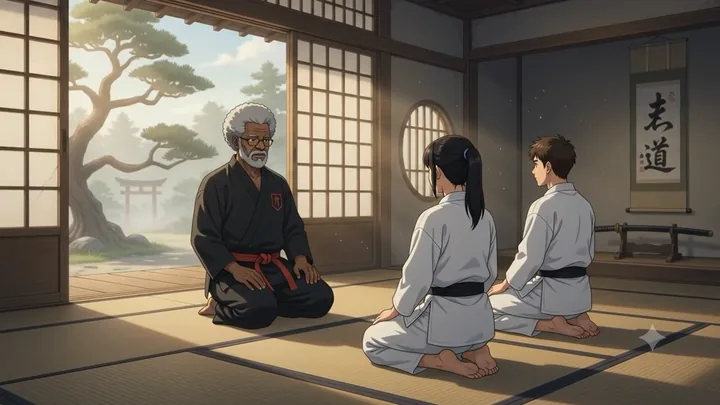
I wanted to give each of my students their own sensei that helps them go through each learning step and prepares them for real debates they have with their classmates. After each kata they immediately practise what they have learned and go into the dojo with real classmates. The sensei is always there to help but he will never just give you the answer. He is there to help when you are stuck, but he is handcuffed to not give the answer.

To make this possible for 30 students at the same time I built myself a dashboard where I can see live where every student struggles and where they thrive, so I can concentrate on the students that struggle and help out where they are stuck. My students love this so much that most of the time I just sit back and watch some really heated debates about if pineapple on pizza is a good choice, if AI agents should be included in political decisions and if ads should be allowed to play with your emotions.

Each belt teaches something new. In the beginning, how an argument is structured, then the fallacies, and in the end they will face the final boss: a tournament among several classes, with a winner who will be remembered forever.

// Ms. Borgwardt

How a round works

01

Learn the move

A short kata on screen. They read it, then answer one quick question.

02

Train with the sensei

They write their argument and the sensei helps them sharpen it, but he will never finish it for them.

03

Enter the ring

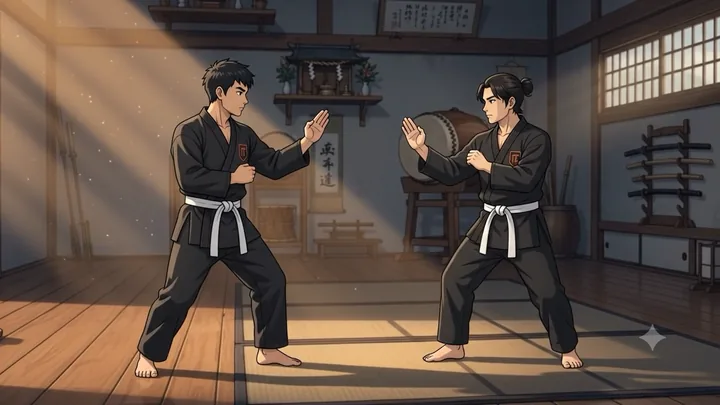
Stand up and debate a real classmate. Face to face, in English.

Every belt runs the same three steps. It just gets harder.

Your Sensei
This is a student in Belt 1. They just wrote their first argument. It has a claim and a reason, but something is missing. Watch what the sensei does: he tells them what is already strong, then asks the one question that helps them find the missing piece themselves.
Sensei · Belt 1
Student We should ban phones in schools because students get distracted.
Sensei I can see your claim and your reason. Now picture this: a student checks their phone in the middle of a lesson. What happens to them in that moment? If you can show me that, your argument has real weight.
The student is missing the impact: why should anyone care? The sensei could just say that, but instead he asks a question. That is how they learn.
AI Sensei

Five Belts.

Learn · Write · Speak · Earn your belt

Five belts, five new moves. They train each one with the sensei, then test it in a real fight with a classmate, and belt by belt they level up until they are ready for the final boss.

01
Stance

In the first belt they walk into the dojo with nothing and learn their first real move: how to build an argument that actually lands. Three sentences, and suddenly they sound like they know what they are talking about.

Click: full belt guide ›
02
Clash

Now they learn to block. When someone throws a trick argument at them they learn how to spot it, call it out, and hit back with a real counter.

Click: full belt guide ›
03
Case

This is where they learn the combo: one argument is not enough anymore, so they chain three together into a full speech and learn how to take the whole room with them.

Click: full belt guide ›
04
Adapt

The difficulty spike. Someone interrupts them mid-speech and the ground shifts, and they have to react, stay cool, and keep fighting without losing their thread.

Click: full belt guide ›
05
Tournament

The final boss. They don't know the topic until 15 minutes before, the whole dojo watches, and at the end there is one winner who will be remembered forever.

Click: full belt guide ›
Belt guide

Inside each belt

BELT 01 Stance Live in class

The moveBuild one argument that actually lands — in three sentences.

What is learned

  • Claim — take a clear side: say what should happen.
  • Reason — give the why behind your claim.
  • Impact — say why it matters, who wins what.

Each concept comes with a worked example, a plain-language "how do I find it" rule, and two exercises before the next one starts.

The fight
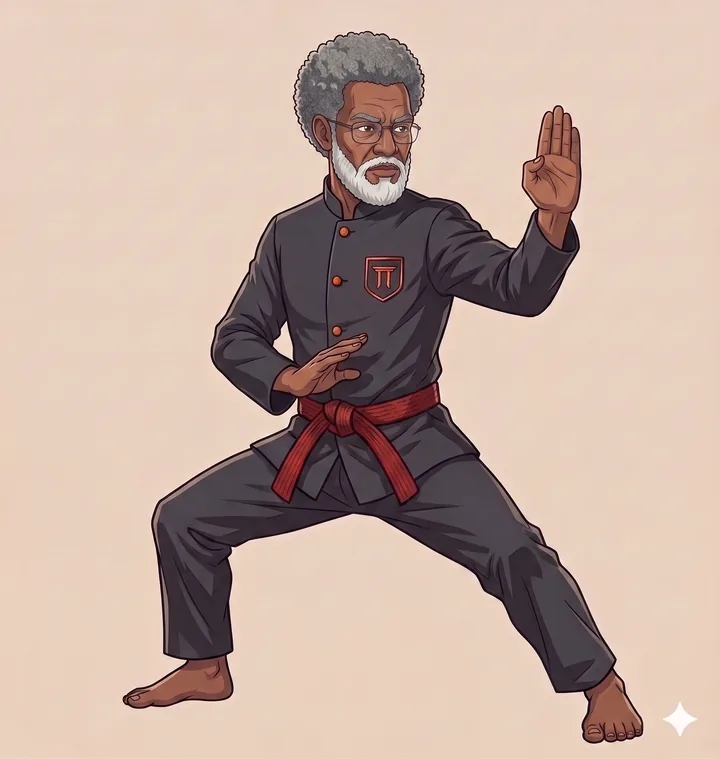
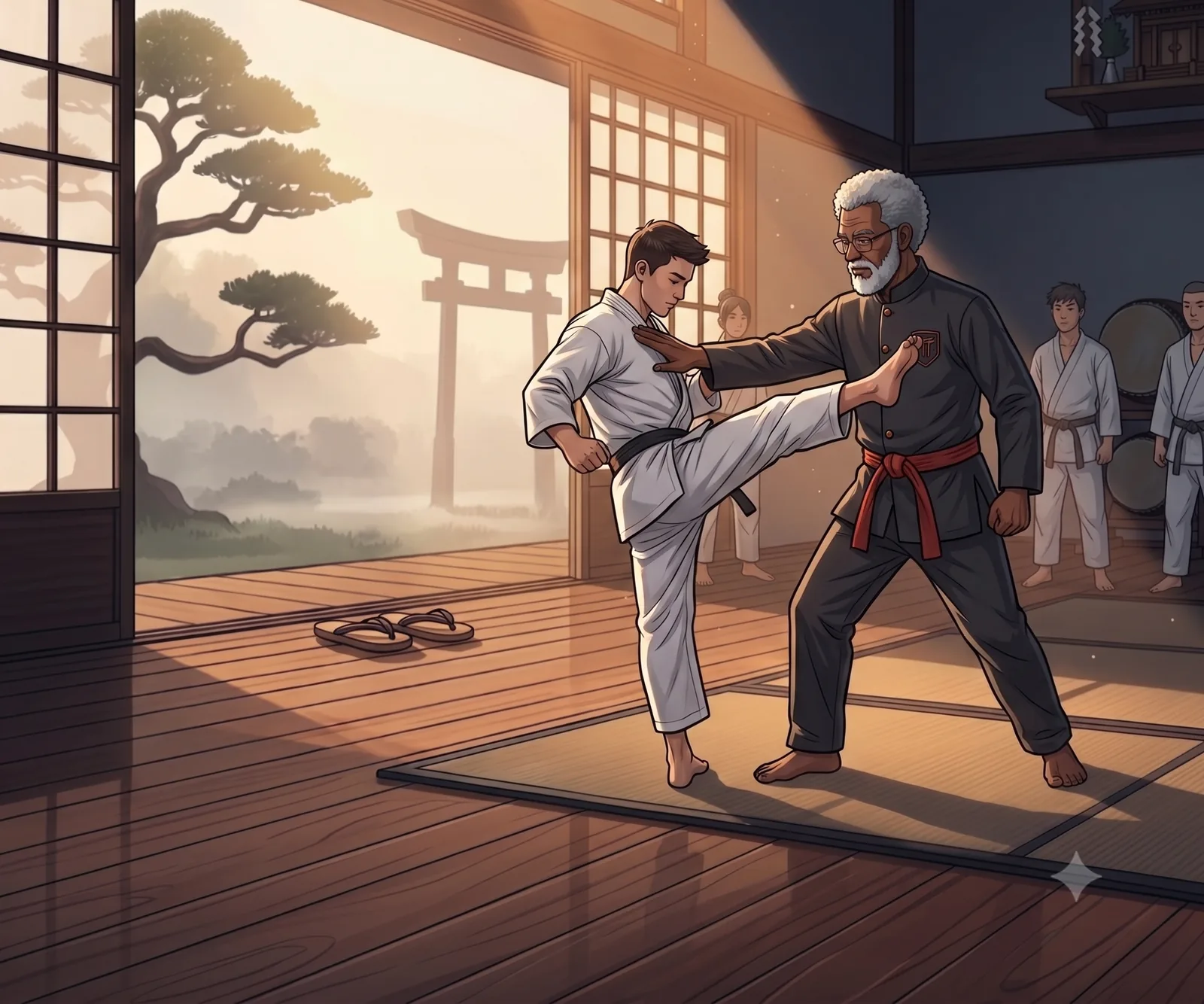
The sensei in fighting stance
  • Motion on screen, e.g. "Schools should replace exams with project work."
  • Students pair up, pick sides: for or against.
  • Laptops closed — one live round, 2:00 on the timer.
  • After: 5 minutes to rewrite the argument, stronger.
First time most of them ever defend a position out loud — with a structure to hold on to.

BELT 02 Clash Live in class

The moveSpot a trick argument, call it by name, and hit back with a real counter.

What is learned

Straw Man illustration
Straw Man
Ad Hominem illustration
Ad Hominem
Appeal to Popularity illustration
Popularity
  • Straw Man — changes your point into something extreme, then attacks that.
  • Ad Hominem — attacks who you are instead of what you said.
  • Appeal to Popularity — says it must be right because many people agree.

Then the counter-move: name the trick, restore your real point, answer the argument that was actually made.

The fight

  • Three rounds of 2:00 each, roles switch every round.
  • Role cards: one student secretly plays a fallacy, the other must catch it live.
  • The model sentence: "That is a Straw Man. I never said that. My real point is…"
  • After: rewrite the rebuttal, fallacy named.
The reference bar with all three fallacies stays visible — nobody has to fight from memory alone.
BELT 03 Case In design

The moveThe combo: chain three arguments into one full speech.

What is learned

  • One argument is not enough anymore: build three Claim–Reason–Impact arguments on one motion.
  • Order them: strongest where it counts, signposts between them.
  • Open and close so the whole room follows — and remembers.

The fight

The sensei lays out three scrolls, one for each argument
  • Same rhythm: train the case with the sensei, then deliver it live, device closed.
  • The partner answers with their own case — first full speech against full speech.
Everything from Belts 1 and 2 stays in play: solid arguments, and the blocks against trick replies.
BELT 04 Adapt In design

The moveThe difficulty spike: keep your thread when the ground shifts.

What is learned

  • Handle the interruption: someone cuts in mid-speech with a question or challenge.
  • React, stay cool, answer — and find the way back to your own line of argument.
  • Decide live: take the point, deflect it, or turn it around.

The fight

A speaker is interrupted mid-speech
  • The partner's job is to interrupt — at the worst possible moment.
  • The speaker's job: keep fighting without losing the thread.
This is the belt where debating starts to feel like the real thing: live, unpredictable, and survivable.
BELT 05 Tournament In design

The moveThe final boss: everything at once, under real pressure.

What is learned

  • Fast preparation: the topic is revealed only 15 minutes before the round.
  • Build a case, expect the tricks, plan for interruptions — all four moves together.

The fight

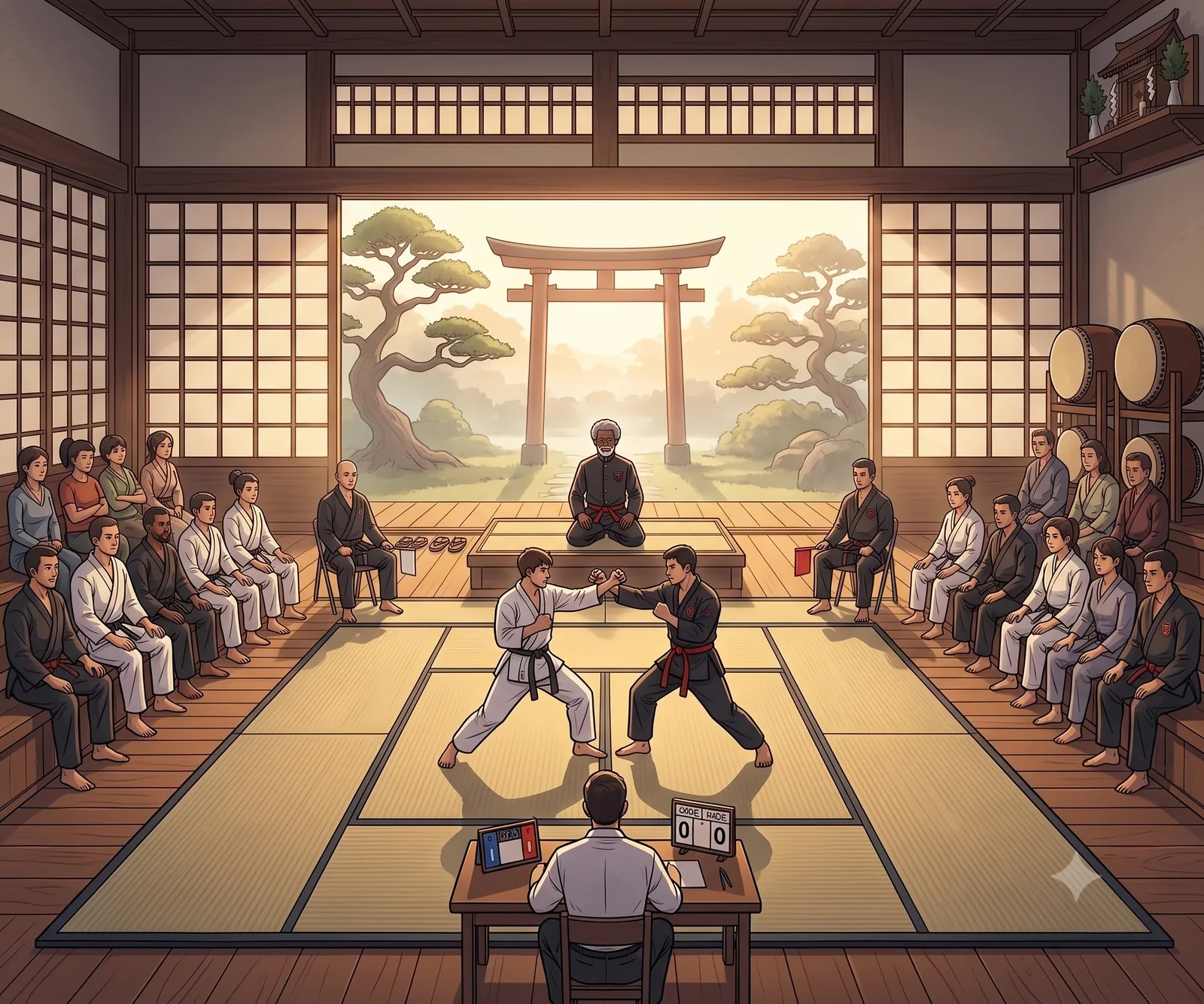
The dojo on tournament day
  • Bracket format: the whole dojo watches every round.
  • At the end there is one winner — who will be remembered forever.
The tournament is the unplugged test of the whole curriculum: no sensei in the ring, only what the student can do now.

A guided walkthrough

Click through one round, the way a student lives it.

Step 1 of 3
The sensei, waiting for you in the Dojo

Welcome to the Dojo, young warrior. I am glad you found your way here. Come in, take a breath, and sit with me for a moment. Everything you need for today is already in this room.

Let me tell you what this place is. In this Dojo I will teach you how to debate. Debating means you say what you think, you give good reasons for it, and you stay calm and fair while you speak. Maybe that sounds big right now. But it is a skill, and like every skill, you can learn it, one small step at a time. And you will use it everywhere: in school, at work, with your friends and your family, for the rest of your life. A person who can explain their ideas gets heard.

Here is our path, so you always know where you are. First, I will show you how a strong argument is built, piece by piece, so you can see what each part does. Then we practice together, slowly, until it feels natural. And when you are ready, you will step into the ring and debate with a real classmate, while I stand at your side.

Are you ready? Then let us begin.

Step 1 of 3 · Learn the move

First, a short lesson.

Every round starts with a small lesson on screen. Belt 1 is about taking a clear stance.

A student sits on a bench in the dojo garden and reads her notes.
Claim what you believe. Ask yourself: what should happen? Say it in one clear sentence.
Reason why you believe it. Ask yourself: why is this true?
Impact why it matters. Ask yourself: what changes if we do this? Picture it.

See the move

Here is a full argument, the way a student would say it. It sounds like one thought. It is built from three parts.

School should start at nine.

Claim

This part takes a side. You can agree or disagree with it. That is what makes it a claim.

Teenagers fall asleep late because their body clock shifts.

Reason

This part tells us why the claim is true. A claim without a reason is just an opinion.

A class that is half asleep learns half as much.

Impact

This part shows what is at stake. It is the part that makes people care.

Spot the gap

Our canteen needs more vegetarian days, because growing meat burns huge amounts of energy.

One part is missing. Which one?

Almost. Look at the start again: “Our canteen needs more vegetarian days” takes a clear side. The claim is there. One of the other two parts is the quiet one.

Almost. The word “because” is doing its work: the energy point is the reason. Look for the part that shows why all of this matters.

Impact Yes. The argument takes a side and gives a reason, and then it stops. It never shows what is at stake. Picture the school after one year of veggie days, and suddenly it matters.

Built the way the belts are built: the worked example comes first, the check uses a fresh example, and you recall it within a minute. Teachers know this as explicit instruction, worked examples and retrieval practice.

Next: training with the sensei.

Step 2 of 3 · Train with the sensei

The sensei trains them.

They write a first argument. The sensei shows them how to make it stronger, but he never writes it for them.

Here is one exchange. A student wrote: “We should ban phones in schools because students get distracted.”

Sensei · Belt 1
Student We should ban phones in schools because students get distracted.
Sensei I can see your claim and your reason. Now picture this: a student checks their phone in the middle of a lesson. What happens to them in that moment? If you can show me that, your argument has real weight.

Before the debate, every student writes their final argument by hand in their notebook. That is what they take into the ring.

Next: the debate.

Step 3 of 3 · Enter the ring

Face to face.

Two students stand up and debate in English, face to face. The phone only shows the topic, whose turn it is and the time. Everything else, they do themselves.

Fictional round · scripted preview. In class this runs on two real phones.

Pineapple on pizza?
MIA — FOR VS JONAS — AGAINST
Both trained the same three moves with the sensei: claim, reason, impact. Now they carry them in their heads, into a live debate.
ROUND 1 · Pineapple on pizza?
YOUR TURN, MIA
0:37
demo tempo
Next: Jonas answers.
The screen answers the two questions every student has: what happens now, and what happens next. That is the whole job of the phone in this round.
Time. Shake hands.

The phone just tells them whose turn it is. The debating itself, my students do face to face.

The only sound in this whole round is two students, debating in English.

That is one round. The Dojo has five belts.